Sicily: The Clue to Everything
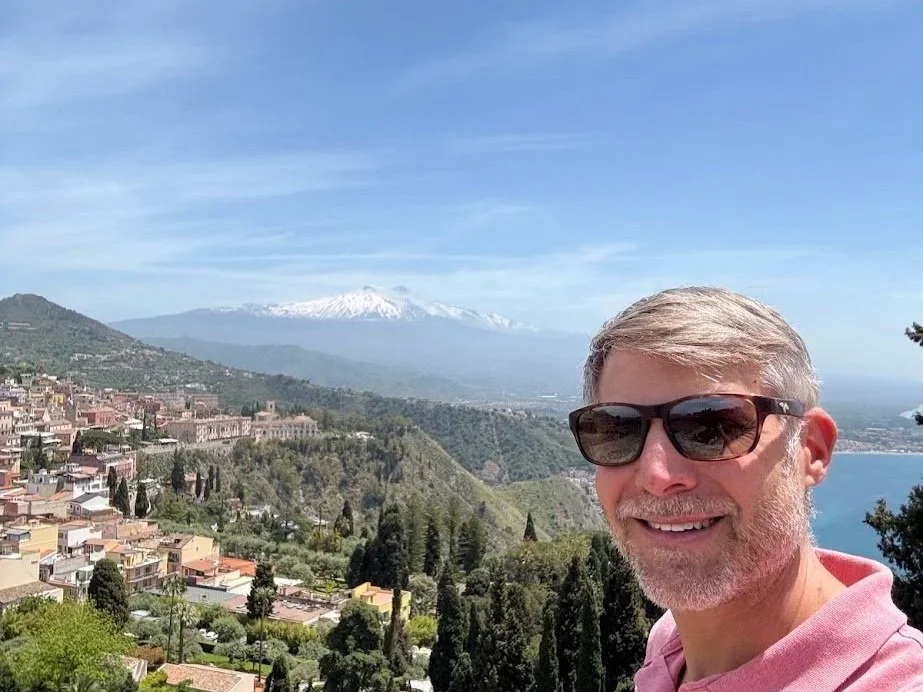
Taormina with Mt. Etna
Usually Katie and I travel as a duo, but this May I packed my bags solo for a place that has been calling my name for years.
There's an old Goethe saying: "To have seen Italy without having seen Sicily is not to have seen Italy at all, for Sicily is the clue to everything." After ten days roaming this Mediterranean jewel entirely on my own terms, I can tell you that Goethe was selling it short.
Sicily is a sensory overload in the best possible way — an island forged by centuries of Phoenician, Greek, Roman, Arab, Norman, and Spanish rule, where ancient history blends seamlessly with a fierce, independent modern spirit. And whether your passion is hiking active volcanoes, getting lost in medieval villages, tracing the steps of emperors through ancient ruins, or dedicating yourself entirely to world-class food and wine, Sicily can be whatever kind of trip you want it to be.
For my ten nights, I wanted a taste of it all.
The 10-Night At-A-Glance Route
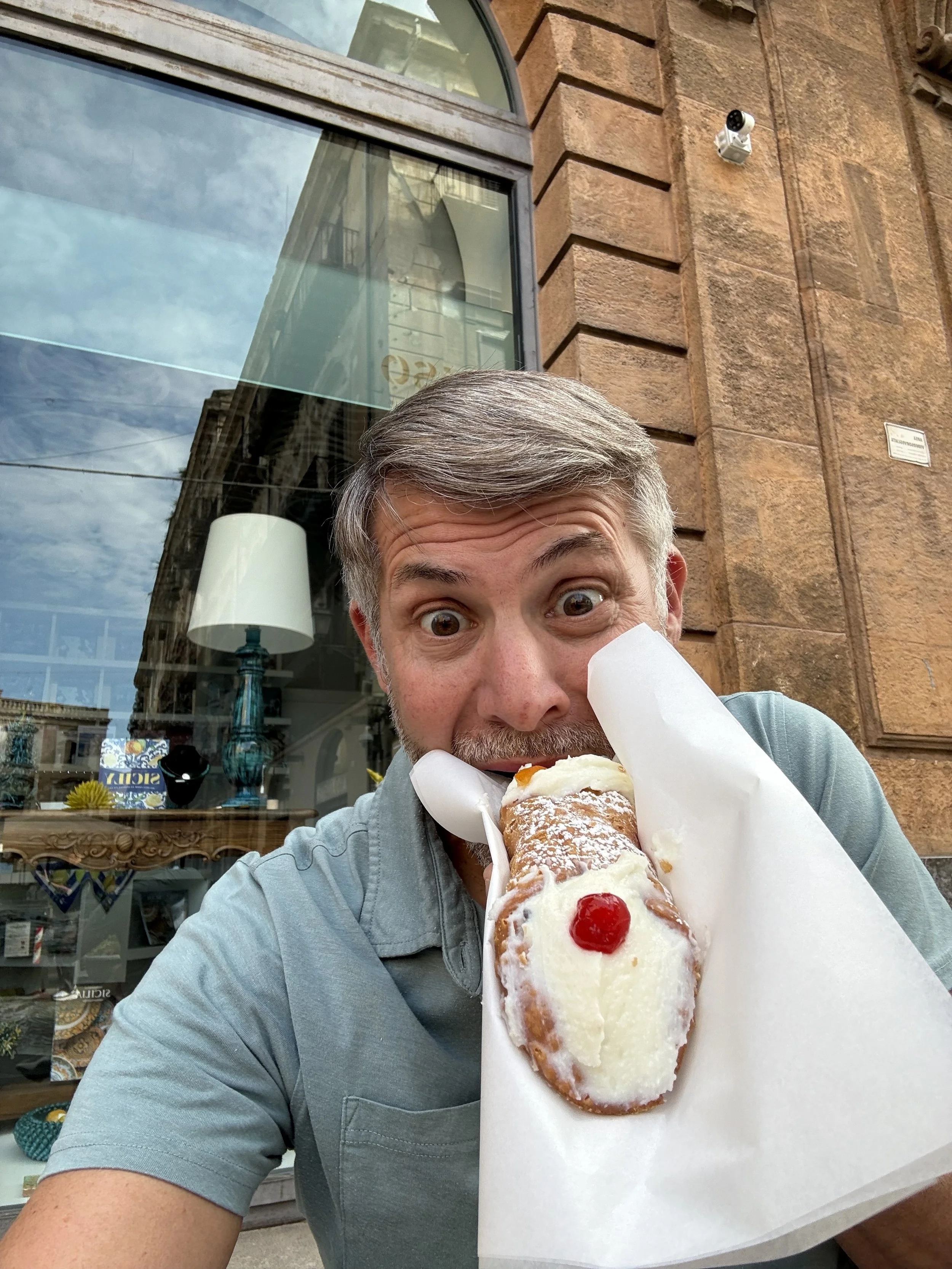
Me and my cannoli
Before diving into the daily details, here is a quick snapshot of how I mapped out my nights and regions across the island:
Nights 1 & 2: Palermo – The vibrant northwestern capital, rich in street food and layered history.
Night 3: Marsala – The western coast, famous for historic salt pans and fortified wines.
Night 4: Agrigento – The rugged southern coast, home to some of the world’s most intact ancient Greek ruins.
Night 5: Ragusa – The southeastern Val di Noto region, defined by dramatic Sicilian Baroque architecture.
Nights 6 & 7: Catania – The volcanic eastern anchor city, sitting directly under the shadow of Mount Etna.
Nights 8, 9 & 10: Viagrande (Relais San Giuliano) – A luxurious, slow-paced retreat in the Etna foothills, used as a base for exploring Syracuse, Ortigia, and Taormina.
The Detailed Itinerary
Nights 1 & 2: The Chaos and Charm of Palermo
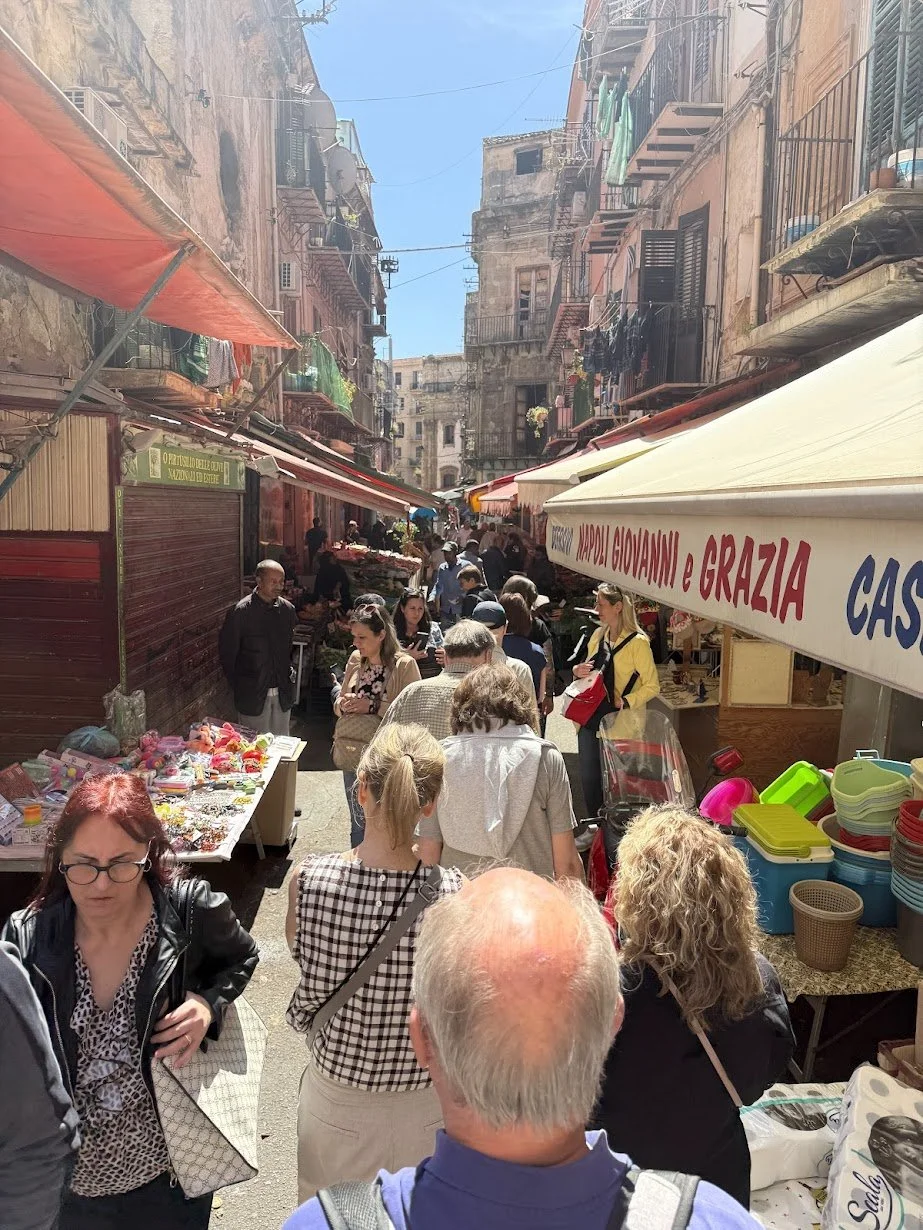
Palermo Vucciria market
My journey began in Palermo — a bustling, gritty, and utterly beautiful city that wears its history on its sleeve. An architectural marvel where Norman cathedrals rub shoulders with Arabic domes, Palermo's real heartbeat lies in its open-air markets.
I dove deep into the street food scene, navigating the packed, aromatic alleyways of the Vucciria market. The food here tells the story of the island's conquerors: arancini stuffed with ragù, savory chickpea fritters called panelle bearing the influence of Arab rule, and sfincione — thick, spongy Sicilian pizza unlike anything on the mainland.
Beyond the food, Palermo's visual beauty completely captured me. Standing at the center of Quattro Canti, you are surrounded by towering symmetrical Baroque facades that make you feel like you're inside an elegant open-air theater. Nearby, the majestic Teatro Massimo — Europe's third-largest opera house — stops you in your tracks, and the great Cathedral reminds you at every glance just how many civilizations have left their mark on this city.
I ended each evening with an Aperol Spritz at the marina, watching local fishermen bring in their catch while sailboats slipped out of the harbor for golden sunset cruises — the perfect blend of local grit and vacation bliss.
Night 3: Medieval Erice to the Coast of Marsala
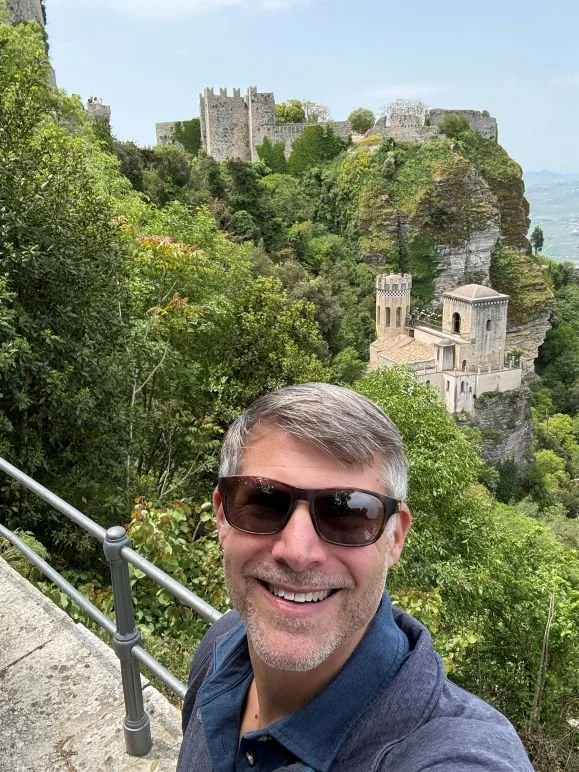
Erice
Leaving the capital, I headed west toward the cloud-shrouded, mountaintop medieval village of Erice — a place so perfectly preserved it feels untouched by the last five centuries. Here I took a hands-on cooking class with a local chef, learning the art of western Sicilian cuisine firsthand. We made busiate — the traditional twisted pasta of the region — pairing it with a vibrant pesto alla trapanese of tomatoes, almonds, and garlic. Simply delicious.
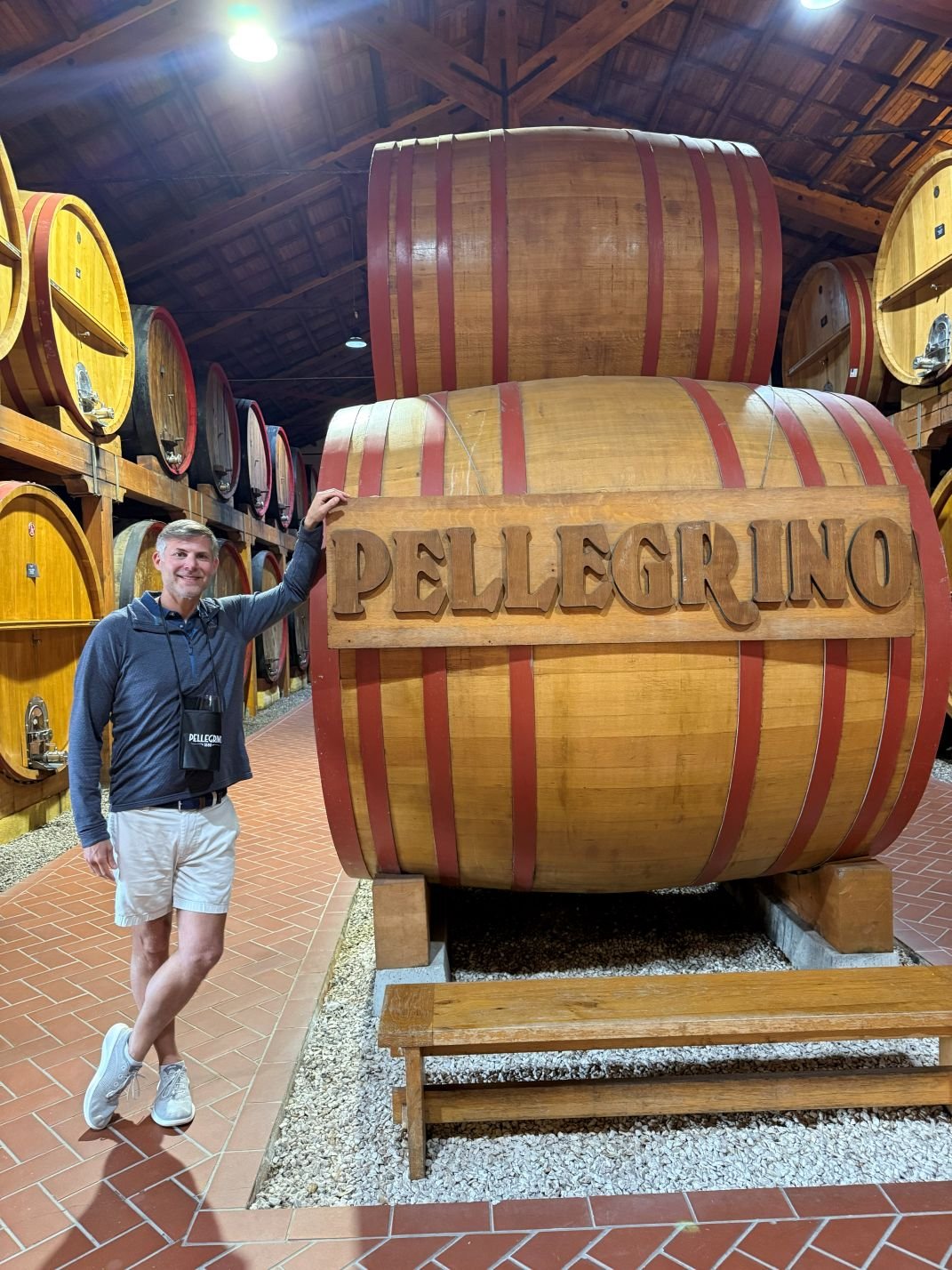
Marsala wine
From those heights I descended to the coastal town of Marsala, famous for its historic salt pans and iconic wine. A fabulous tour at Pellegrino, one of the region's legendary wineries, promptly dismantled every assumption I had brought with me. I'll admit I arrived associating Marsala strictly with cooking and overly syrupy dessert wines. I left a convert. The diversity of their fortified wines is remarkable — complex, dry, and distinctly non-sweet in ways I never expected. Marsala has officially earned a permanent place in my glass.
Night 4: Liquid Gold and Ancient Temples in Agrigento
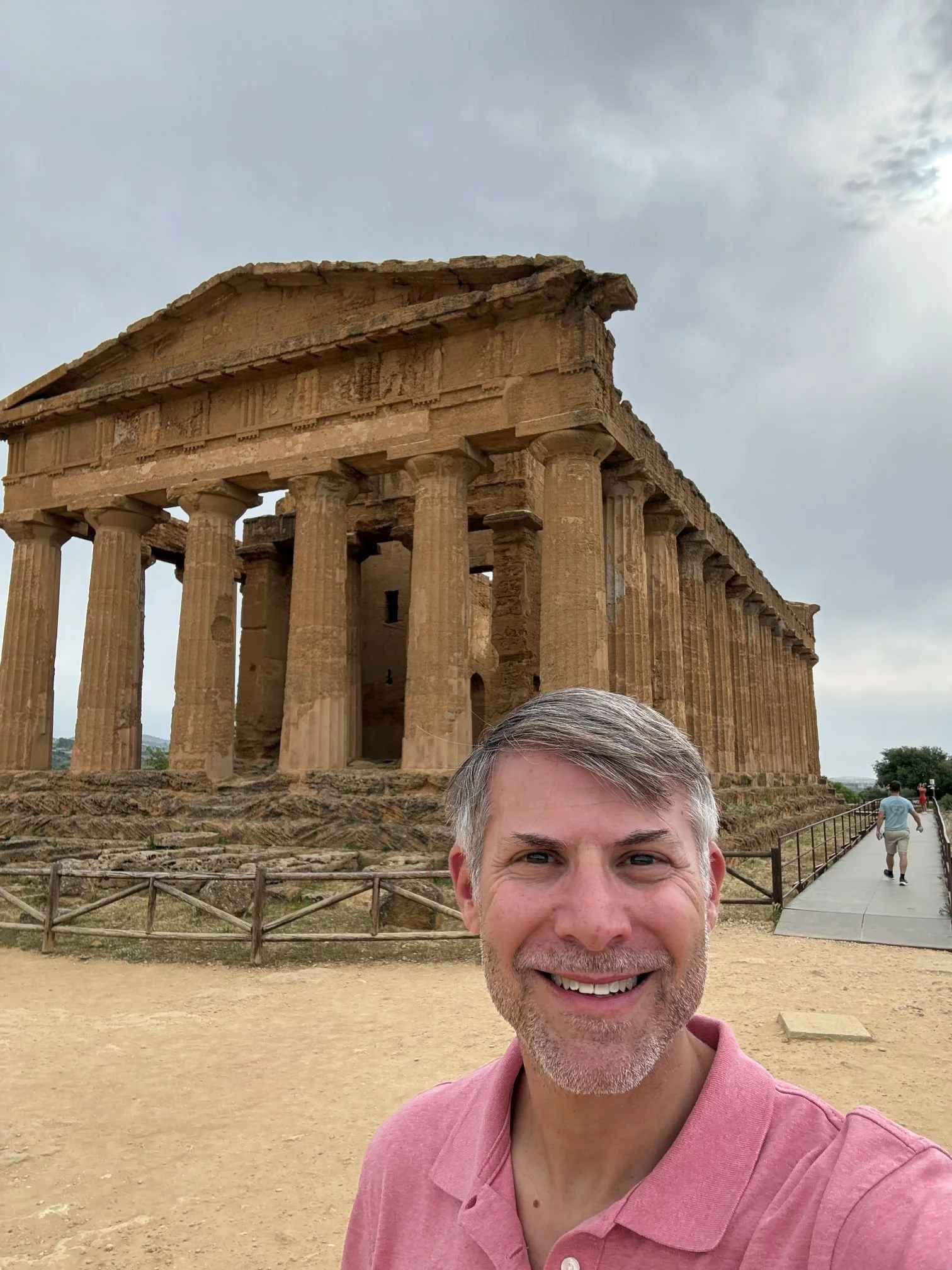
Agrigento
Continuing along the southern coast, I spent my morning at a traditional family-run organic olive farm. Tasting freshly pressed olive oil — vibrant, green, and peppery — alongside warm bread is a pleasure in itself, but the real highlight was the family behind it. It was fascinating, and sobering, to hear about the very real challenges they navigate daily: shifting climate patterns, skyrocketing fuel costs, and relentless production pressures. It gave me a whole new appreciation for the liquid gold on the table.
The afternoon belonged to the ancient world. The Valley of the Temples in Agrigento is one of the most sublime archaeological sites on earth — and having traveled extensively through Greece, Italy, and Turkey, I can honestly say I have never encountered an ancient Greek structure as remarkably complete as the temples here. What made the experience truly come to life was my guide, a local archaeologist whose passion for the history was utterly infectious. There is a reason I always recommend hiring an expert on-site: the right guide can translate cold stone into living, breathing stories, and that makes a monumental difference.
Nights 5 & 6: Mosaics, Baroque Hill Towns, and Fresh Mozzarella
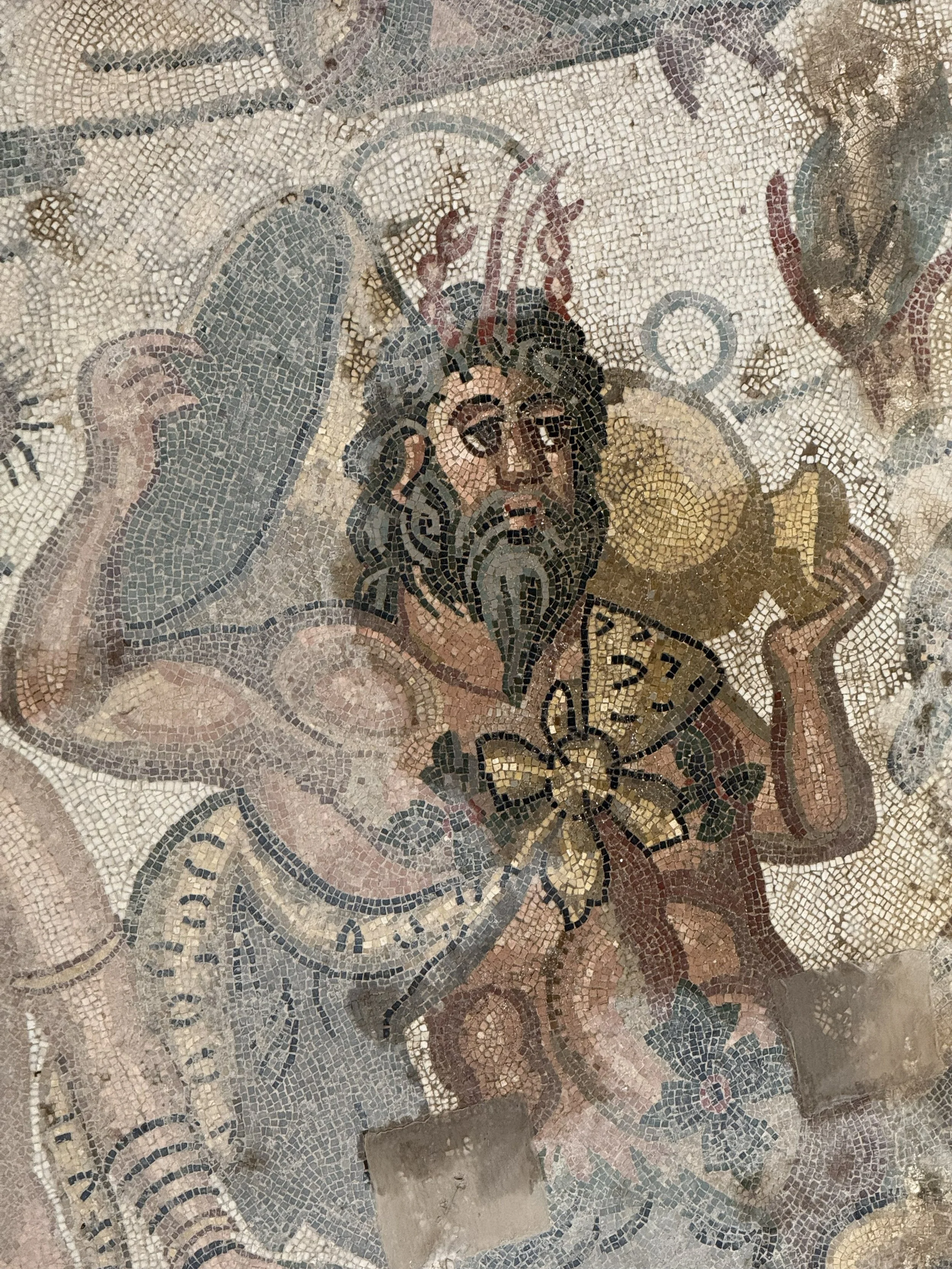
Villa Romana del Casale
Moving inland on day five, I stopped at Piazza Armerina to visit the Villa Romana del Casale. I truly didn't know what to expect before walking in, but it quickly became one of my absolute favorite experiences of the entire trip. The sheer volume of the ancient Roman mosaics is staggering, but it’s the astonishing detail and the fact that they survived so perfectly intact that blows you away. From hunting scenes to the famous "bikini girls" exercising, it felt like walking through an ancient photo album. I literally couldn't stop taking pictures.
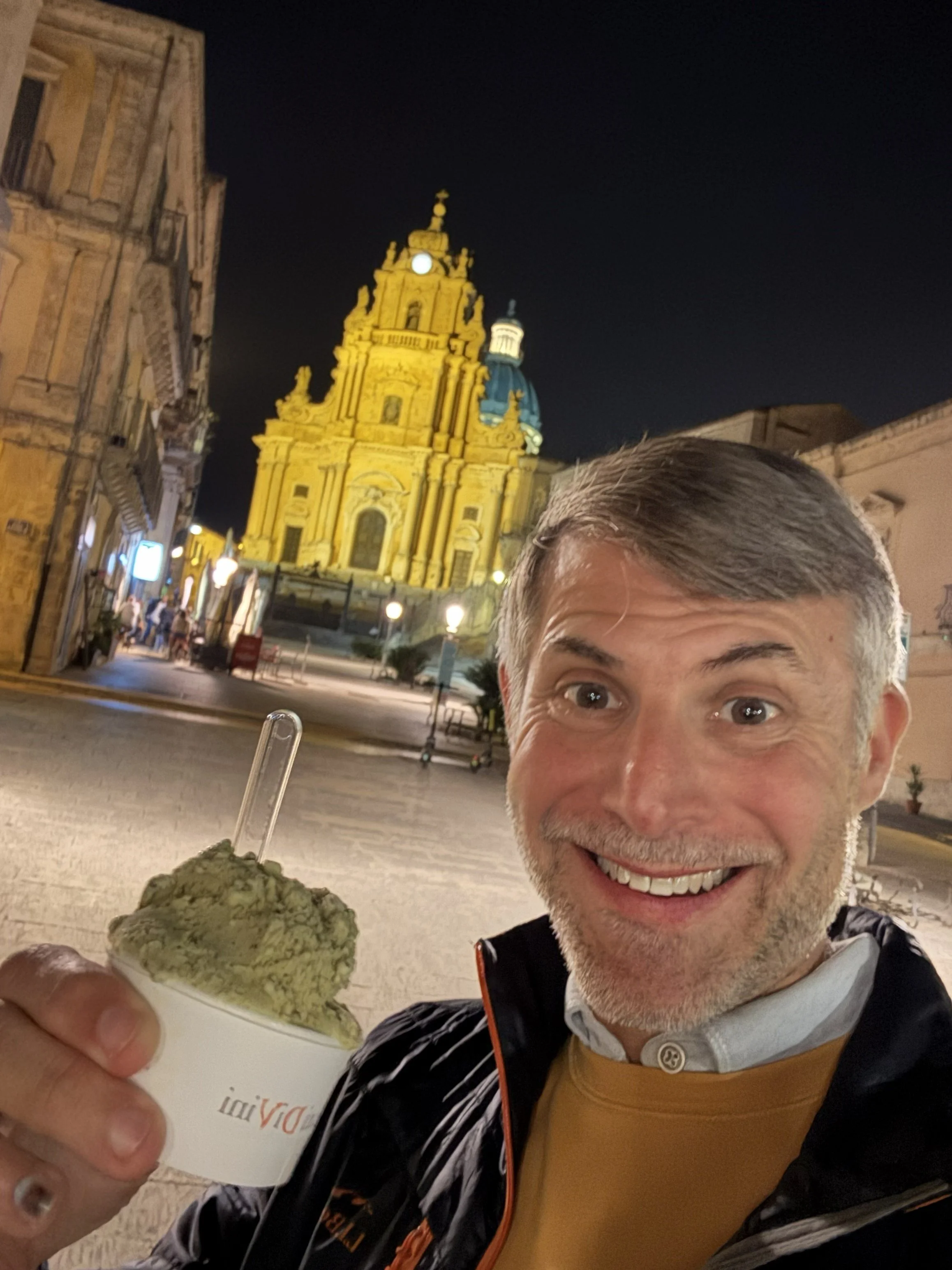
Ragusa with my pistachio gelato
From there, I drove into the Val di Noto region to spend Night 5 in Ragusa, followed by a visit to Noto on Day 6. Both of these Baroque hill towns are stunningly cool. By day, they are bustling with tourists exploring the honey-colored palazzi and grand churches. But they become even better at night. Once the day-trippers leave, the streets quiet down, allowing you to stroll around completely unencumbered. Walking those illuminated, dramatic streets in the cool night air is where you really get an authentic feel for the place.
Also on Day 6, I detoured to a local buffalo farm to see how traditional mozzarella is made. Let's be honest — who doesn't love buffalo mozzarella? But having it that fresh, still warm, incredibly creamy, and weeping milk when you cut into it, is something else entirely.
Nights 6 & 7: Mount Etna and lunch at Gambino Winery
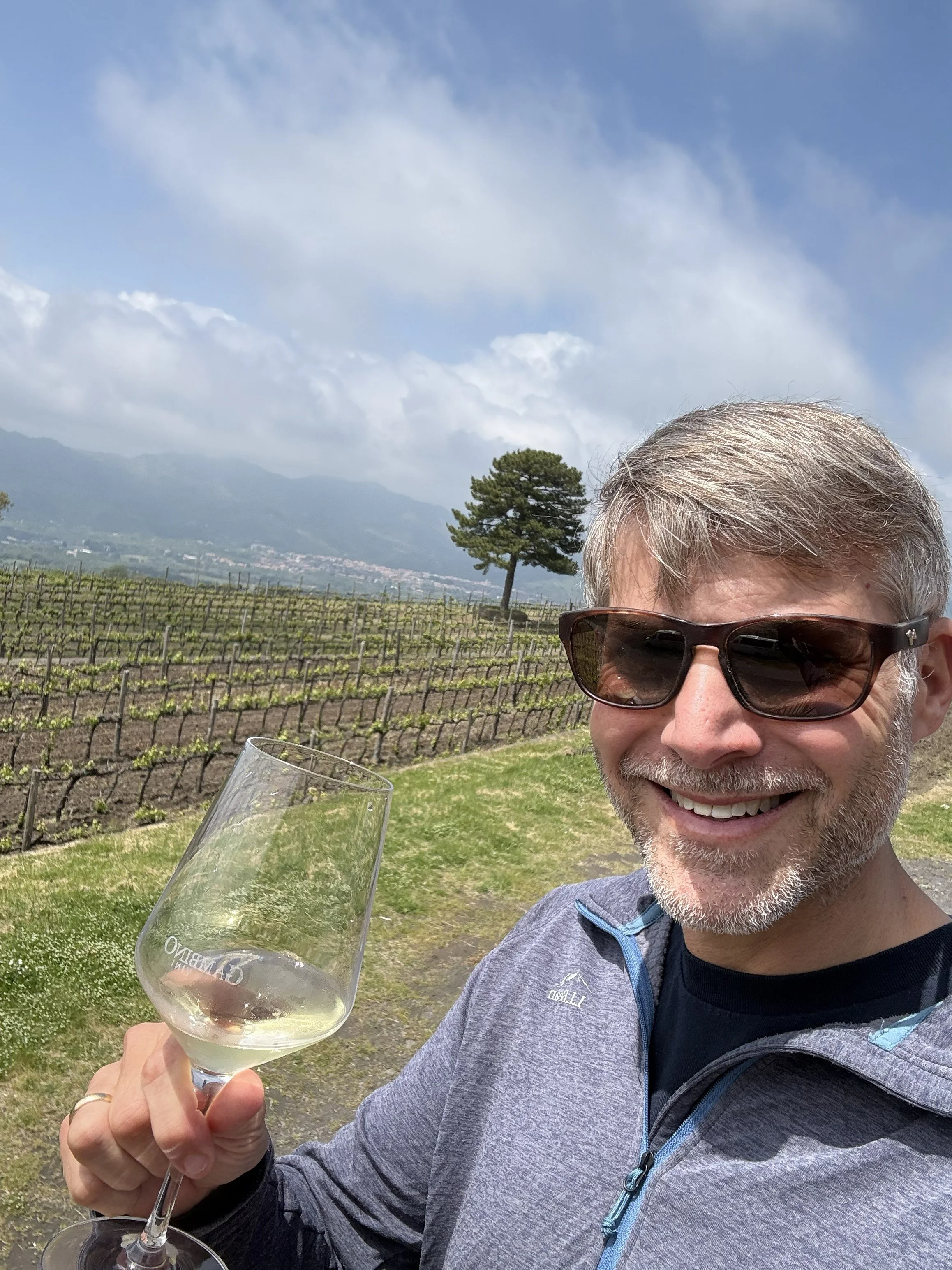
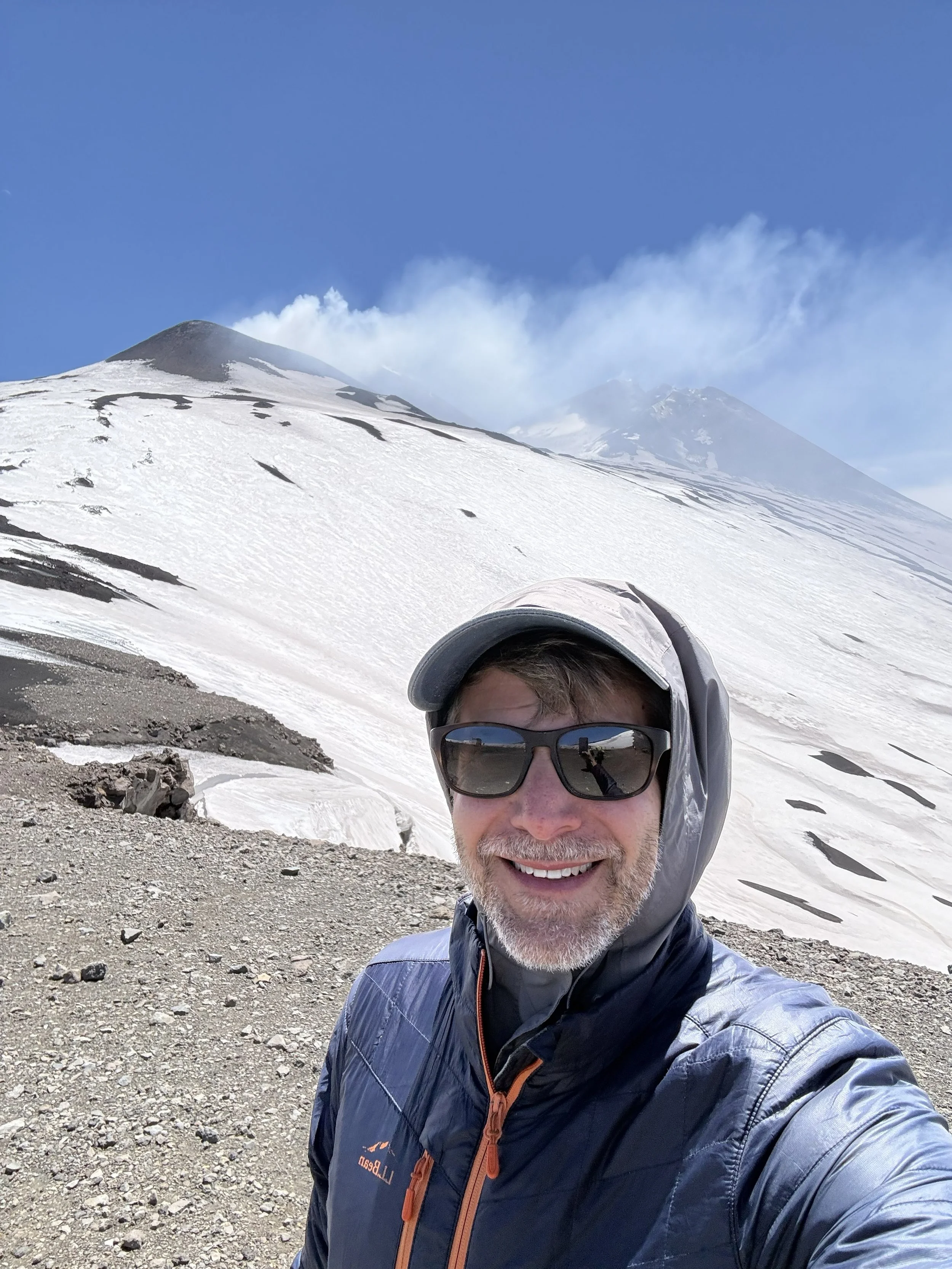
My next base was Catania, a vibrant anchor city built entirely from black volcanic stone under the shadow of Mt. Etna. The highlight of this stretch was, of course, the volcano itself. I spent an incredible day hiking across fields of dried lava terrain on the slopes of Europe's highest active volcano. The stark, lunar landscape contrasts beautifully with the lush greenery below.
Naturally, a proper recovery was required after the hike. I followed up the trek with a spectacular wine visit and lunch at Gambino Winery, nestled high on the eastern slopes of the volcano. Sitting out there, enjoying a world-class lunch paired with wines that perfectly express that unique volcanic terroir - it's the kind of afternoon that stays with you long after you've left.
Nights 8, 9 & 10: Unwinding at Relais San Giuliano
For the final three nights of my trip, I chose to slow things down significantly, basing myself at Relais San Giuliano, a stunning boutique hotel nestled in the peaceful foothills near Mt. Etna.
This hotel truly defies its size. With just 15 elegantly designed rooms, it retains an incredibly intimate, peaceful, and relaxing vibe while offering the amenities of a world-class luxury resort. I spent my time savoring the comforts of the property - starting each morning with their exceptional breakfast and spending the afternoons lounging by the outdoor pool or losing track of time in the spa's sauna. The service from start to finish was flawless.
While the property feels like a secluded oasis, it sits in an ideal location. It is just a short, easy walk into the charming village of Viagrande, which is home to some fantastic local restaurants. That said, you don’t even have to leave the gates for an unforgettable meal. The hotel’s own restaurant, iPalici—housed inside a beautifully restored 16th-century volcanic millstone—was an absolute culinary highlight of my entire trip. The contemporary twists the chef puts on traditional Sicilian ingredients left me wondering why I'd ever eat anywhere else.
During the day, when I wasn't relaxing poolside or hiding out in the spa, I used this perfect eastern base to do some regional exploring, taking day trips to Syracuse and Taormina.
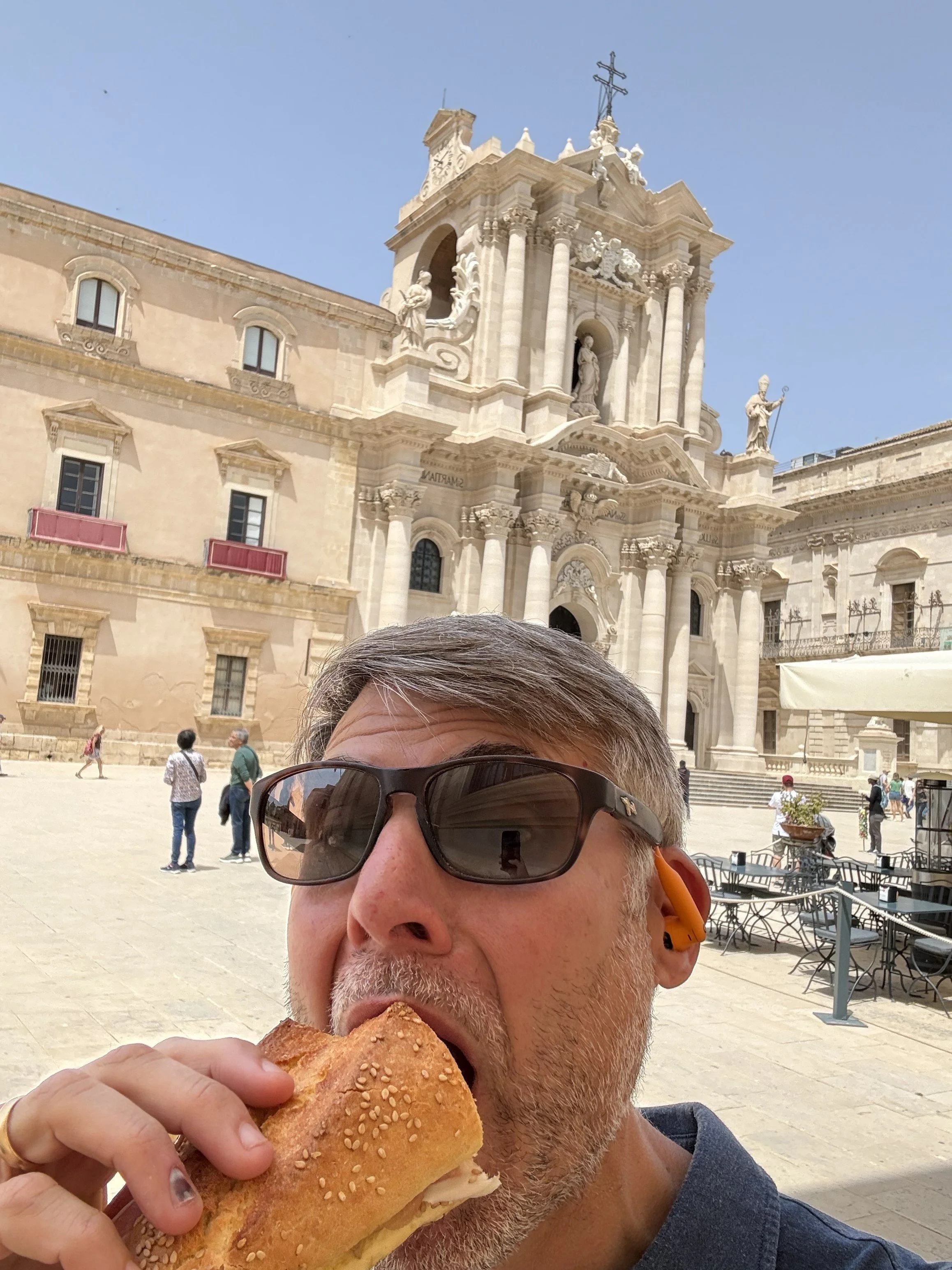
Syracuse, and specifically its historic heart of Ortigia, completely captivated me. Walking across the bridge into the labyrinthine streets of Ortigia feels like stepping onto a living historical film set. The dazzling white Baroque piazzas meet the dramatic deep blue of the Ionian Sea, giving it a timeless, deeply poetic soul that you can't help but fall in love with.
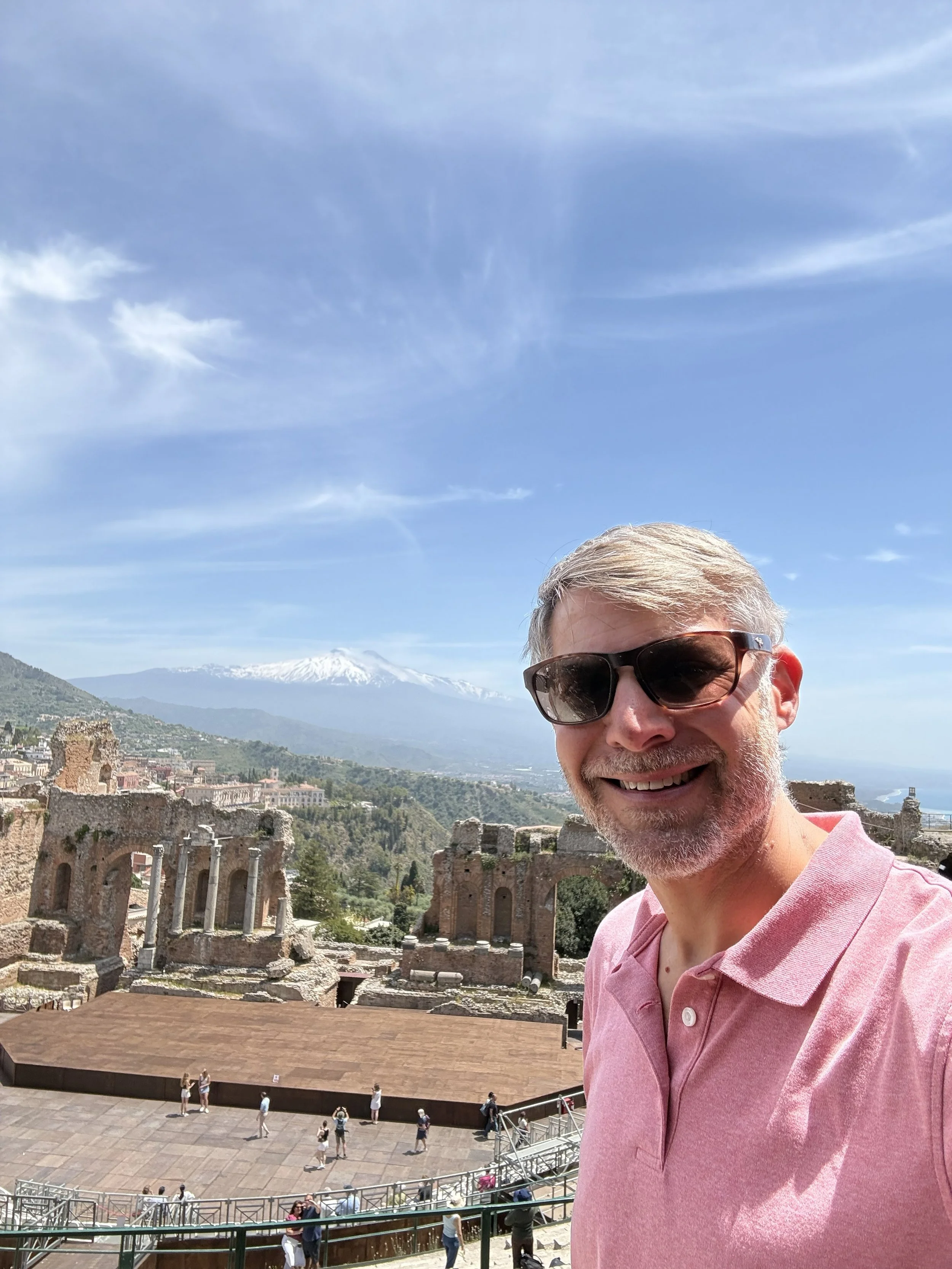
Taormina, on the other hand, is pure high-drama glamour. Dramatically perched on a cliffside high above the ocean, it may offer the most cinematic coastal scenery in all of Sicily — but nothing prepared me for standing in the ancient Greek Theater, looking through the weathered stone columns out at the sparkling sea with a smoking Mt. Etna framed perfectly in the distance.
Lessons Learned & Reflections
Every trip leaves you with a few insights. Here's what navigating this magnificent island solo taught me:
Choose Your Bases Wisely: My fast-paced route let me cover a lot of ground, but if I were doing it again I'd consolidate. Skip the overnight in Catania entirely. For a perfect 7-day trip, fly in and out of Catania and anchor yourself in three bases: 3 nights in the Etna foothills (like Relais San Giuliano), then split the remaining 4 nights between two villages — Ortigia, Noto, Ragusa, or Taormina, depending on your style and budget.
The Master Plan for 10-Days: If you have 10 days, fly into Catania and out of Palermo (or vice versa) — don't waste time doubling back. Take the 7-day eastern itinerary above, then use your extra 3 nights to push west: 2 nights in the high-energy streets of Palermo, and 1 transition night at an agriturismo — a family-run winery or olive farm. The ones around Agrigento, Marsala, and Piazza Armerina are extraordinary, and the hospitality is unlike anything you'll find in a hotel.
Drive Yourself - With One Golden Rule: A rental car is absolutely the way to go — it gives you unmatched freedom and is easier to navigate than you might expect, with straightforward pickup and drop-off at both major airports. The golden rule: avoid driving into city/town centers. If you are spending time directly inside Palermo or Catania, you do not want a car there—pick it up on your way out of town or return it before your stay begins. For hill towns like Taormina, Ortigia, and Noto, don't worry about the narrow streets — secure parking lots sit right outside the ancient gates and it's an easy walk in.
Let the Cuisine Be Your Anchor: You cannot understand Sicily without understanding its food. Lean into the culinary scene at every turn — street food tours, cooking classes, olive farm visits, vineyard tastings. Meeting the passionate locals behind these operations and hearing their stories will enrich your entire experience in ways that no monument or museum can.
Timing is Everything: The sweet spots are May/June and September/October, when temperatures are mild and the island hasn't yet hit peak capacity. July and August bring intense heat and dense crowds — worth avoiding if you have flexibility. September and early October are ideal if swimming in that crystal-clear Mediterranean water is a priority; May delivers gorgeous weather, lush landscapes, and springtime blooms. Winter travel (November through March) is peaceful but comes with a real caveat — many seasonal restaurants, hotels, and attractions in coastal towns close for winter. Easter often triggers early reopenings, but May is when Sicily truly comes back to life and you can count on full access.
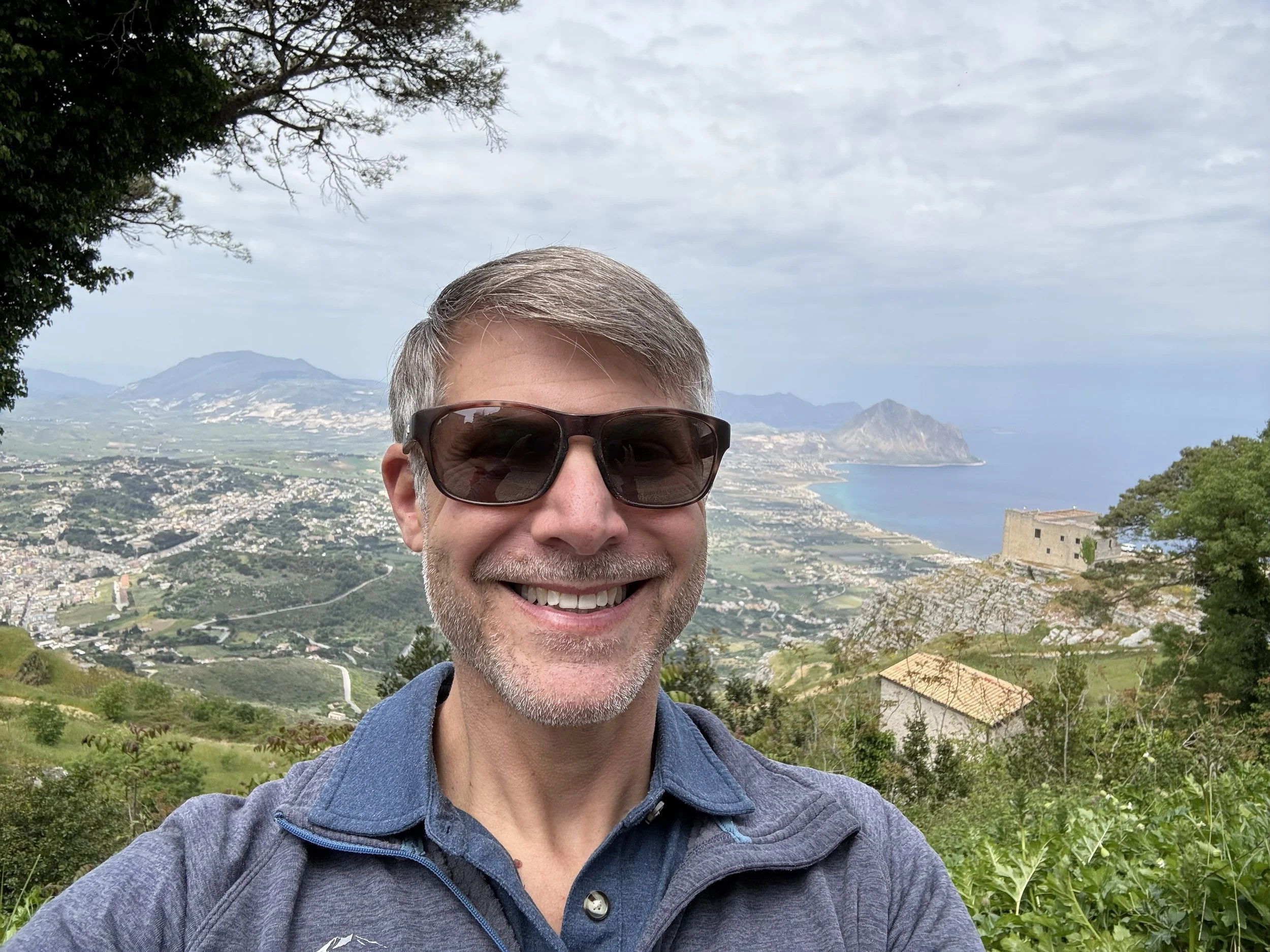
View from Erice
Your Sicily Awaits
Sicily is not a destination where a one-size-fits-all itinerary works. The island is too rich in history, too diverse in landscape, and too obsessed with extraordinary food for that. Whether you want to slow down at a luxury countryside estate, hike a smoking crater, or spend ten days chasing the world's best street food and wine, Sicily can deliver — and then some.
Planning a seamless trip across this beautiful island takes insider knowledge, careful pacing, and knowing exactly where to find those hidden gems. That's precisely where we come in.
Ready to start planning your own Sicilian adventure? We'd love to help. It’s as easy as clicking this link >>Let’s Start Planning!