
THE OTHER ITALY PLANNING GUIDE
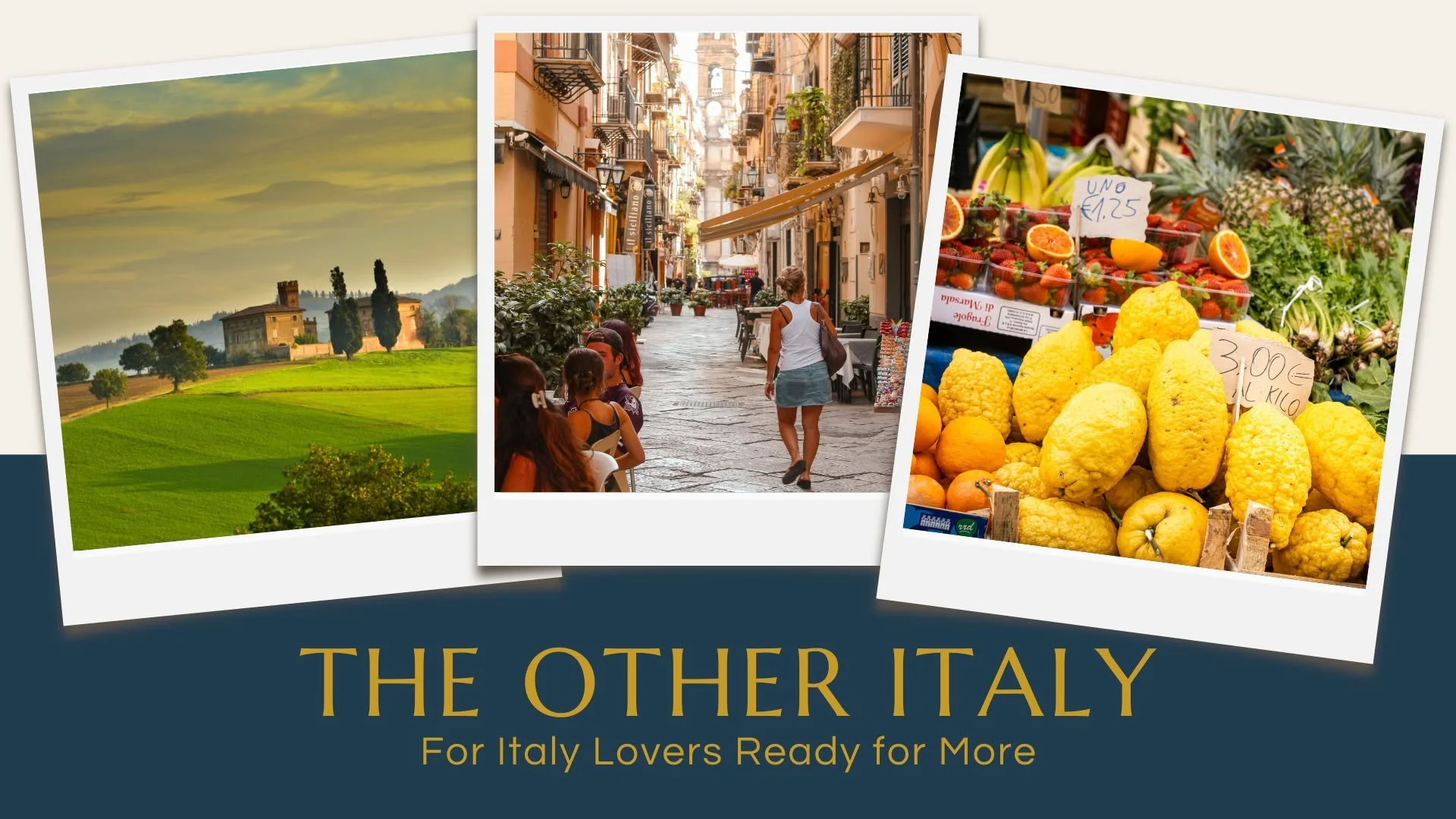
You’ve done Italy 101.
Welcome to the 200 level.
Rome, Florence, and Venice are the foundation, and you loved them. Now you’re wondering what the rest of Italy is like. Quite different, as it turns out. We’re David and Katie, the travel advisors behind Jetsettery, and here are four regions we’d send you to next: what surprises people, where it gets complicated, and the questions we’d ask before planning your trip. You’ll also find practical advice on private guides, cooking classes, food tours, and renting a car.
Which region is best for you?
The 200 level is about experiencing Italy more deeply by staying within one region and slowing down to give you a closer connection to the place, its people and its food. We like to base that decision on the following.
Tap a region to see why it fits.
1When do you want to go?
May and June are two of the best months on the island, and May is when David went. It is warm enough for the coast and the Etna hikes, and ahead of the summer heat and the crowds. The markets fill with artichokes, fava beans and wild asparagus, and wild fennel goes into the pasta con le sarde.
Go to Sicily ↓May is the month we picked for our own Puglia trip in 2027, for warm days and fewer crowds than summer. It is also fava bean and artichoke season, and the fresh beans are eaten raw with a piece of pecorino.
Go to Puglia ↓White truffle season runs from late September into early December, and October is the peak. It is also the busiest time in Alba, so this is the region to plan furthest ahead.
Go to Piedmont ↓The olive harvest starts in November and runs into December, so you can taste the new oil at the mill. The summer crowds are gone by then.
Go to Puglia ↓The Etna grape harvest runs from mid-September to mid-October. Many coastal places close for winter, so don’t wait too long.
Go to Sicily ↓The cheese dairies, ham producers and balsamic houses take visitors by appointment for most of the year, so it is the easiest of the four to fit around your calendar.
Go to Emilia-Romagna ↓2What should be the main event?
Parmigiano-Reggiano, prosciutto di Parma and traditional balsamic all come from here, and you can visit the people who make them.
Go to Emilia-Romagna ↓Barolo and Barbaresco, the Langhe hill towns and the white truffle all share the same hills, so the trip builds itself around the table and the glass.
Go to Piedmont ↓Etna’s lava fields, a long coastline, towns like Taormina high above the sea and baroque Noto, and the Greek temples at Agrigento.
Go to Sicily ↓Whitewashed Polignano a Mare on its sea cliffs, the old town of Gallipoli on its island, trulli villages like Alberobello, and olive groves in between.
Go to Puglia ↓3How do you want to get around?
There is a lot worth seeing, from the slopes of Etna to the villages of the southeast, and outside the big cities there is little public transport. A car puts all of it within reach, and the drives between bases are usually between one and three hours.
Go to Sicily ↓The farms, white towns and coast are spread across the countryside with little public transport between them. A car puts them all within reach, and once you have picked a base the drives are short.
Go to Puglia ↓The Langhe hill towns sit close together, and a car is the easiest way to link them.
Go to Piedmont ↓Bologna, Modena and Parma sit on one rail line, so you can move between them without a car and add a driver for the producer visits out in the countryside.
Go to Emilia-Romagna ↓Tastings are the point here, so we would hire a driver for the wine days and skip the car.
Go to Piedmont ↓A private driver or transfer is an option in every region, so not driving never rules a place out. Renting a car? Start with our Rental Car guide.
Best in May and June, September and October
Sicily
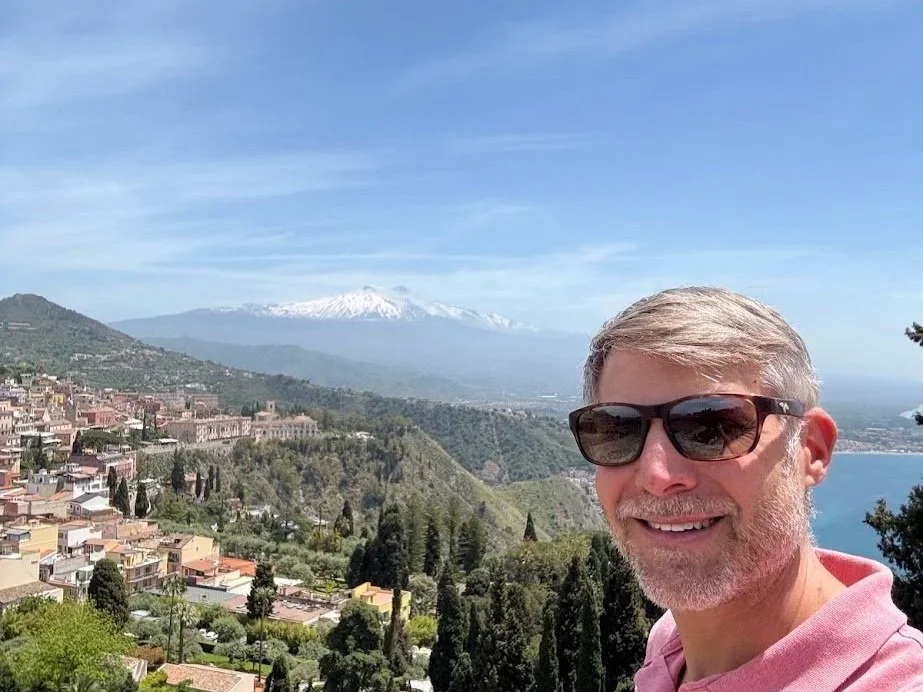
Sicily is where we’d look for a return trip that mixes landscapes, history, and time around the table. David spent ten days exploring the island, and the variety is what stayed with him.
You can hike across lava fields on Etna and eat lunch at a winery on its slopes. You can stand in the Valley of the Temples at Agrigento, where the Greek temples are more intact than any David has seen in Greece, Italy, or Turkey. You can walk the Roman mosaics at Villa Romana del Casale, take a cooking class in Erice, and watch buffalo mozzarella being made, still warm.
WHAT SURPRISES PEOPLE
How different one end of the island is from the other. Palermo has grit and an edge, in the best way. Catania gives you room to breathe. Even the arancini disagree. In Palermo they're arancine, round like an orange. In Catania they're arancini, shaped like a cone, a nod to Etna. And Marsala: David arrived thinking cooking wine and left a convert after a tour at Pellegrino, where the fortified wines were dry and complex.
WHERE IT GETS COMPLICATED
Sicily is big, so the hard part is deciding what to leave out and where to sleep. We'd spend a night or two in Palermo, skip Catania as an overnight (it's a handy gateway to Etna, not where we'd stay), and base ourselves in the countryside or villages of the southeast. Rent a car, with one rule about where not to use it. May and June or September and October are the sweet spots, and many coastal places close in winter.
WHAT WE’D ASK YOU
Are you drawn to landscapes, towns, or the table? Would you rather unpack once or keep moving? Wine glass or ruins, and in what proportion? Are you okay renting a car? When do you want to go?
KEEP GOING
David’s full Sicily route THE DOSSIER
Arancina or arancino? FIELD NOTE
Palermo, street food first FIELD NOTE
What Sicily actually is FIELD NOTE
Who We are
We are Katie and David Walter, a two-person travel advisory in coastal Maine. We have traveled independently in more than 60 countries, and Katie teaches cooking, so food is never an afterthought.
What we offer
We plan independent trips with you: the itinerary, the bookings, preparation before you go, and support while you travel. The first conversation is free.
Want to talk through your plans?
A Boarding Call is a free conversation with David and Katie about the trip you have in mind.