What Sicily Actually Is
Most people who come to us curious about Sicily start with the same version of it. Taormina. The Godfather. Palermo street food. Mount Etna. That's not wrong. It's also only a slice of what Sicily is.
Sicily is the largest island in the Mediterranean. It sits at the crossroads of Greek, Arab, Norman, and Spanish history, and what that collision produced, in the architecture, the food, the culture, is unlike anywhere else in Italy.
The food alone is worth a serious trip. Sicilian cuisine is not Italian food with a regional accent. It's its own tradition entirely. Arab rule, from the 9th to the 11th century, left an imprint that's still completely visible, in the spicing, the street food, the sweets. The arancine in Palermo are not the arancini you've had anywhere else. The granita is not a flavored ice. The fish markets are a cultural event, not a grocery stop.
The landscape shifts dramatically depending on where you are. The Val di Noto in the southeast, a UNESCO World Heritage site for its Baroque architecture, is an entirely different Sicily from the windswept salt marshes and ancient Greek temples of the west. The Aeolian Islands sit off the northern coast, each one distinct. Pantelleria is closer to Tunisia than to the Sicilian mainland, and feels like it.
What we find, consistently, is that Sicily repays time and curiosity in a way that very few destinations do. It's also, for the right kind of traveler, the most surprising Italy trip they've ever taken.
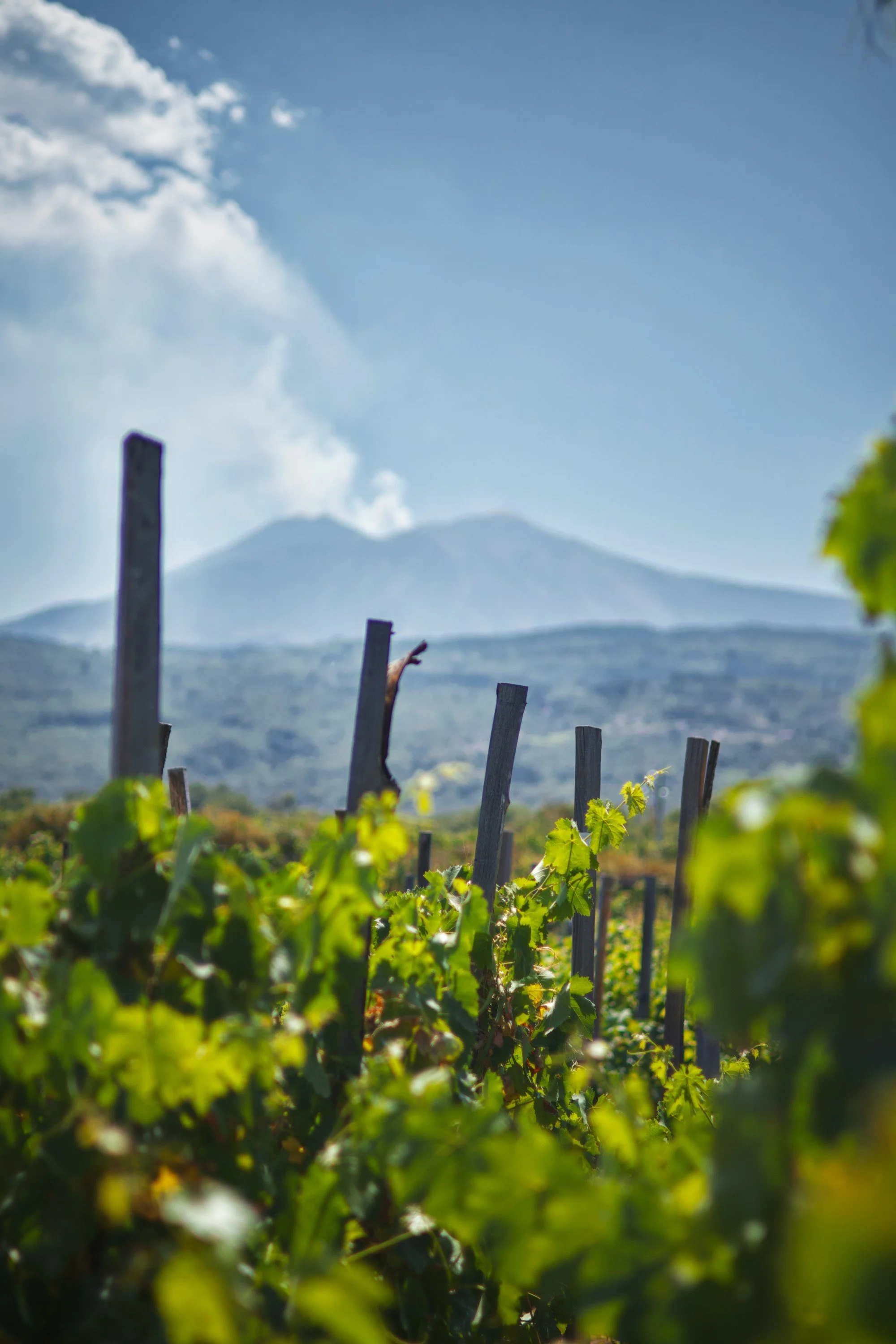
Mount Etna with vineyards