Why Ostuni Is Worth a Stop
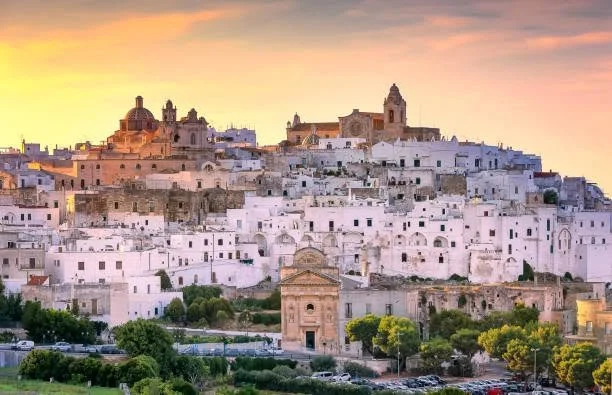
Ostuni sits on a hill above the Adriatic, and from a distance it looks like a snowdrift got confused about the season. Every building in the old town is painted white, floor to roofline, a tradition locals still follow. The usual explanation is that whitewash was once believed to help contain the plague, though like many such stories it is closer to local legend than documented fact.
Walk into the centro storico and the logic changes completely. Streets narrow to the width of a doorway, then open into a small piazza, then narrow again. There's no fast way through it, and that's the point. Ostuni was built to be walked slowly, alleys that, as locals tell it, curved to block wind and confuse anyone with bad intentions centuries ago.
Locals call it "La Città Bianca," the white city, and the nickname fits best at sunset, when the whitewashed walls catch the evening light and the whole hillside seems to glow from the inside. Skip the overlook everyone photographs. Ask a local where they'd go instead. The answer is rarely the same spot.